Istina izlazi na vidjelo (dio 16)
The Truth Comes to Light
Automatski transkript (lektorisan)Automatic transcript (proofread)
Automatski transkript. Napravljen je iz zvuka snimka i lektorisan, ali nije provjeren uz slušanje— moguće su greške, naročito u imenima i arapskim citatima. Mjerodavan je video.
Machine translation. Translated from the automatic Bosnian transcript — names and Arabic quotations may be inaccurate. The video is authoritative.
- 0:00
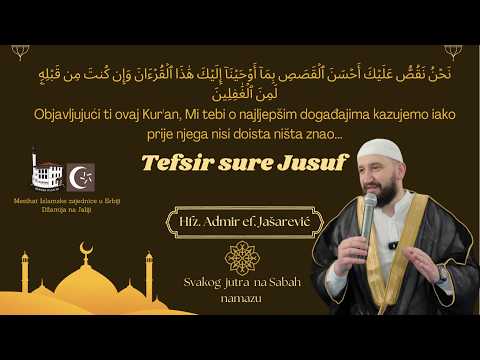
نَحْنُ نَقُصُّ عَلَيْكَ أَحْسَنَ الْقَصَصِ بِمَا أَوْحَيْنَا إِلَيْكَ هَٰذَا الْقُرْآنَ وَإِنْ كُنْتَ مِنْ قَبْلِهِ لَمِنَ الْغَافِلِينَ
„Mi ti kazujemo najljepše kazivanje objavljujući ti ovaj Kur’an, a ti prije njega o tome nisi ništa znao.“ (Jusuf, 3)
- 0:31
Nakon što kralj usni san, i on i veliki dostojanstvenici oko njega bijahu nemoćni da mu protumače taj san, sjeti se onaj mladić koji je bio sa Jusufom da postoji tamo u tamnici jedan čovjek koji tumači snove.
- 0:56
San gdje je kralj vidio da sedam debelih krava budu pojedene od sedam mršavih krava, od strane sedam mršavih krava, i da sedam sasušenih klasova pojede, ili uništi, sedam onih zelenih klasova.
- 1:20
Pa ga Jusuf protumači: da su to sedam godina. Prvo će doći, kaže, sedam plodnih godina, gdje će ljudi žeti, bit će plodne godine, pune bereketa, i gdje će ljudi skladištiti hranu u klasovima, gdje neće vaditi zrna iz klasova, već skladištiti tako, kako se ne bi pokvarila ta hrana.
- 1:49
A da će nakon toga doći sedam žestokih, sušnih godina, u kojima će ljudi pojesti ono što su skladištili onih prvih bereketnih sedam godina. I nakon toga, kaže Jusuf, doći će godina u kojoj će biti puno kiše, puno plodova i tako, i tako dalje. Pošto je kralj bio puno zabrinut zbog ovoga sna, svidjelo mu se ovo tumačenje ovog sna, tumačenje Jusufovo. Pa posla izaslanika u zatvor da dovedu Jusufa.
- 2:29
I reče melik, ili kralj: „Dovedite mi“, kaže, „Jusufa, dovedite mi ga.“ I kada dođe izaslanik do Jusufa, dođe u zatvor,
- 2:48
kaže: „Poziva te kralj da dođeš kod njega na dvor.“ Kaže Jusuf: „Ne, ne, ne idem.“ Pa je Jusufu ovdje obraz bio preči od slobode. I ovo treba vjerniku da bude za nauk: da mu bude obraz preči i od slobode i od položaja i od svega ostalog.
- 3:21
Znači, prvo obraz, pa poslije. Šta mu kaže Jusuf, ovom izaslaniku? „Irdži' ila Rabbike“ – kaže: „Vrati se kod gospodara, vrati se kod gospodara,
- 3:36
fes'elhu ma balun-nisvetil-lati katta'ne ejdijehunn. Ma balun-nisvetil-lati katta'ne ejdijehunn“ – „Šta je sa onim ženama koje su prerezale ruke kada sam ja ušao kod njih? Doista moj gospodar dobro zna za njihove spletke.“
- 4:00
Zanimljivo je da Jusuf nije spomenuo premijerovu ženu, namjesnikovu ženu, već je spomenuo ove žene koje su ga navodile na blud, pozivale na blud.
- 4:17
Kažu učenjaci: zbog onog, kaže, dobročinstva koje su mu oni pružili dok je bio mali, zbog dobročinstva, pa su ga i odgojili. „Ekrimi mesvahu“ – kada je rekao, na ovaj način, kada je rekao ovaj premijer, kaže: „Lijepo se“, kaže, „ponašaj prema njemu.
- 4:43
Učini mu boravak ovdje, u ovom dvoru, ugodnim.“ Pa Jusuf to nije zaboravio. Nije htio Jusuf da kaže: „Pitaj kralja za tu i tu, zbog čega me je smjestila u zatvor, zbog čega me je premijer smjestio u zatvor, zbog toga i toga“, već, zbog tog dobročinstva prema njemu, nije htio tako da se izrazi.
- 5:13
Pa gledajte, draga braćo, kako je Jusuf ovdje poštovao one koji su ga odgojili.
- 5:24
Pa zamislite kako čovjek treba da poštuje, da poštuje svoje roditelje. Kaže Allah, subhanehu ve te'ala, da ga je majka nosila iz slabosti u slabost i da ga hrani dvije godine, da ga doji dvije godine.
- 5:43
Koliko čovjek treba da je zahvalan svojim roditeljima! Pa kada Allah, subhanehu ve te'ala, spominje dobročinstvo prema roditeljima, odmah ide ta naredba nakon obožavanja Njega, to jest naredbe obožavanja samo Njega.
- 6:00
وَقَضَىٰ رَبُّكَ أَلَّا تَعْبُدُوا إِلَّا إِيَّاهُ
„Gospodar tvoj je odredio da ne obožavate nikoga osim Njega…“ (El-Isra, 23)
- 6:03
A tvoj Gospodar ti naređuje da ne obožavaš nikog drugog osim Njega. „وَبِالْوَالِدَيْنِ إِحْسَانًا“ – i kaže: da se prema roditeljima lijepo ophodiš, da se lijepo ophodiš prema roditeljima.
- 6:18
Pa kaže Jusuf ovdje… ovdje nije, nije htio… ali ovo je bilo mnogo pametno od Jusufa i oštroumno, jer Jusuf je znao da će kralj da dođe do rješenja i da će kralj da zna, preko svojih puteva, ko ga je navodio na blud, ko ga je otjerao u zatvor, i tako, i tako dalje.
- 6:43
Pa nakon toga kralj sakupi ove žene, i naravno među njima ovu ženu premijera, kaže: „Kale ma hatbukunne“ – reče kralj: „Šta je s vama“, kaže, „šta je s vama – iz ravedtunne Jusufe – zbog čega ste Jusufa pozivale na blud? Je li vam on dao neki povod? Je li vam Jusuf dao neki povod?“ „Sve što smo čuli o njemu je bilo dobro.“
- 7:33
Pa se uključi žena ovog premijera, nakon što je uvidjela da je Jusuf nijednom nije spomenuo po lošem. I Kur'an nam to govori: Jusuf je od početka do kraja nijednom nije spomenuo po lošem, niti u zatvoru, niti prije, niti poslije.
- 8:08
Pa kaže: ako je ovaj čovjek ovoliko čedan i dobar, znači mora da izađe istina, mora da izađe istina na vidjelo. Ne može drugačije.
- 8:24
Sada će istina da izađe na vidjelo. „Ene ravedtuhu an nefsihi“ – kaže: „Ja sam ga pozivala“, kaže, „na blud. Ja sam ga pozivala na blud. Ve innehu le mines-sadikin“ – „a on je“, kaže, „govorio istinu“, to jest on nije htio da se odazove mome pozivu. Nije htio da se odazove mome pozivu.
- 8:49
Pa i Jusuf – jučer smo spomenuli – da je on, ovaj, od siddikina, od onih koji stalno govore istinu, istinoljubivi, koji vole istinu. I kaže: „Ovo sam također rekla da moj muž zna da ga nisam izdala“ – izmišljajući laži na njega – da nisam počinila nemoral sa Jusufom, već se sve svodilo na pozivanje na zinaluk.
- 9:24
Da nismo, niti ja niti on, prešli granicu i počinili blud. „I da Allah“, kaže, „nikad neće uputiti one izdajnike.“ Allah neće uputiti čovjeka izdajnika i neće dozvoliti, neće dozvoliti da ona njegova izdaja i one njegove spletke nađu put do nevinih, čistih ljudi. Neće Allah to dozvoliti,
- 10:05
ma koliko se to nama činilo da je to nekad moguće. Allah, subhanehu ve te'ala, [nejasno] da se uvijek te njihove spletke vrate baš na koga? Na njih. Pa kaže dalje ova žena: „Ve ma uberri'u nefsi“ – i kaže: „Ja ne opravdavam sebe.“
- 10:29
Kaže: „Doista, doista je“, kaže, „duša, doista duša“, kaže, „navodi insana na zlo.“ Pa to je osnova, da duša navodi insana na zlo. Pa su tri vrste duše. Prva jeste „emmaretun bis-su'“, kako ovdje spominje Allah, subhanehu ve te'ala, u Kur'anu, ona koja stalno čovjeka navodi na zlo.
- 10:50
Duša koja sama sebe kori, to je druga vrsta. Kaže Allah, subhanehu ve te'ala: „I zaklinjem se dušom koja sama sebe kori.“
- 11:07
Pa ova ima dvije podvrste. Ima duša koja sama sebe kori kada čovjek počini neko loše djelo, pa ga ona kori, kaže: „Mogao si da učiniš dobro djelo, zbog čega si učinio loše djelo?“ A, kaže, ima ona koja navodi čovjeka i kori ga kada čovjek učini neko dobro djelo. Pa se desi da čovjek udijeli pet eura, kaže: „Mogao si udijeliti sto dinara, [nejasno] pet eura, to je mnogo, nemaš ti baš toliko stalno da udjeljuješ.“ I stvarno je to tako, draga braćo.
- 11:47
Evo, provjerite sami sebe, pa ćete da vidite. I treća jeste „en-nefsul-mutmeinne“. [nejasno] Allah, subhanehu ve te'ala, [nejasno] u Kur'anu: „Ja ejjetuhen-nefsul-mutmeinneh, irdži'i ila Rabbiki radijeten merdijjeh“ – [nejasno] – „fedhuli fi ibadi“ – uđi među Moje robove – „vedhuli džennetí“ – i uđi u Džennet. [nejasno] Ebu Bekr es-Siddik, kada je Poslanik, sallallahu alejhi ve sellem, preselio, pa ga je… poljubio. Nakon toga, nakon što je preselio, proučio je
- 12:28
ove ajete. Također, draga braćo, kaže, spominje se tamo, kaže, da su tri najveća čovjekova neprijatelja: ova duša koja navodi čovjeka na zlo, šejtan i loš prijatelj.
- 12:47
Nema većeg neprijatelja za čovjeka od lošeg prijatelja. Pa ćete vidjeti da je čovjek na dobru, i dolazi u džamiju, i voli svoje komšije, i pokoran je svojim roditeljima, poslušan, i pokoran Allahu, i jednom krene da se druži sa lošim ljudima… I, kako kaže Poslanik Muhammed, sallallahu alejhi ve sellem, čovjek ostane, ili se vrati, na vjeri svoga prijatelja. To je ono: kakvi su ti prijatelji, takav si.
- 13:23
Ne može drugačije. Ne može čovjek da bude dobar, a da ima loše prijatelje, ili obrnuto. Nikako. Nego, samo ako si dobar, imaš dobre prijatelje. Ako si dobar, one loše prijatelje ćeš da ostaviš. Toliko za danas. Pa ćemo, ako Bog da, sutra nastaviti. Allah vam dao svako dobro.
- 0:00
نَحْنُ نَقُصُّ عَلَيْكَ أَحْسَنَ الْقَصَصِ بِمَا أَوْحَيْنَا إِلَيْكَ هَٰذَا الْقُرْآنَ وَإِنْ كُنْتَ مِنْ قَبْلِهِ لَمِنَ الْغَافِلِينَ
“We relate to you the best of stories in revealing to you this Qur’an, though before it you were among the unaware.” (Yusuf 12:3)
- 0:31
After the king had his dream, and both he and the great dignitaries around him were unable to interpret that dream for him, the young man who had been with Yusuf remembered that there was a man there in the dungeon who interpreted dreams.
- 0:56
The dream in which the king saw seven fat cows being eaten by seven lean cows, by seven lean cows, and seven dried-up ears of grain eating, or destroying, seven green ears.
- 1:20
And Yusuf interpreted it: that these are seven years. First there will come, he says, seven fertile years, when people will reap; they will be fertile years, full of barakah (blessing), and people will store the food in the ears, not taking the grains out of the ears, but storing them that way so that the food would not spoil.
- 1:49
And that after that there will come seven severe years of drought, in which people will eat what they stored during those first seven blessed years. And after that, Yusuf says, there will come a year in which there will be much rain, much fruit, and so on, and so forth. Since the king had been very worried about this dream, he liked this interpretation of the dream, Yusuf's interpretation. So he sent an envoy to the prison to bring Yusuf.
- 2:29
And the malik, the king, said: "Bring me," he says, "Yusuf, bring him to me." And when the envoy came to Yusuf, came to the prison,
- 2:48
he said: "The king is summoning you to come to him at the palace." Yusuf said: "No, no, I will not go." For Yusuf, his honour was dearer than his freedom here. And this should be a lesson for the believer: that his honour should be dearer to him than freedom, than position, and than everything else.
- 3:21
So, honour first, and then the rest. What does Yusuf say to him, to this envoy? "Irji' ila rabbika" – he says: "Go back to your master, go back to your master,
- 3:36
fas'alhu ma balun-niswatil-lati qatta'na aydiyahunn. Ma balun-niswatil-lati qatta'na aydiyahunn" – "What about those women who cut their hands when I came in to them? Truly, my Lord knows well their schemes."
- 4:00
It is interesting that Yusuf did not mention the prime minister's wife, the governor's wife, but mentioned these women who had tried to lure him into fornication, who had invited him to fornication.
- 4:17
The scholars say: because of the kindness, it is said, that they had shown him when he was small, because of that kindness, since they had also raised him. "Akrimi mathwahu" – when he said, in this way, when this prime minister said: "Treat him well," he says.
- 4:43
"Make his stay here, in this palace, a pleasant one." And Yusuf did not forget that. Yusuf did not want to say: "Ask the king about so-and-so, why she put me in prison, why the prime minister put me in prison, because of this and that"; rather, because of that kindness towards him, he did not want to express himself that way.
- 5:13
So look, dear brothers, how Yusuf here respected those who had raised him.
- 5:24
So imagine how a person should respect, respect his own parents. Allah, subhanahu wa ta'ala, says that his mother carried him in weakness upon weakness and fed him for two years, nursed him for two years.
- 5:43
How grateful a person should be to his parents! And when Allah, subhanahu wa ta'ala, mentions kindness to parents, that command comes immediately after worshipping Him, that is, after the command to worship Him alone.
- 6:00
وَقَضَىٰ رَبُّكَ أَلَّا تَعْبُدُوا إِلَّا إِيَّاهُ
“Your Lord has decreed that you worship none but Him…” (Al-Isra 17:23)
- 6:03
And your Lord has decreed that you worship none but Him. "وَبِالْوَالِدَيْنِ إِحْسَانًا" – and He says: that you treat your parents well, that you treat your parents well.
- 6:18
So Yusuf says here… here he did not, did not want to… but this was very clever and shrewd of Yusuf, because Yusuf knew that the king would get to the bottom of it, and that the king would find out, through his own channels, who had tried to lure him into fornication, who had sent him to prison, and so on, and so forth.
- 6:43
So after that the king gathered these women, and of course among them this wife of the prime minister, and said: "Qala ma khatbukunna" – the king said: "What is the matter with you," he says, "what is the matter with you – idh rawadtunna Yusufa – why did you invite Yusuf to fornication? Did he give you any cause? Did Yusuf give you any cause?" "All that we have heard about him has been good."
- 7:33
Then the wife of this prime minister spoke up, after she realised that Yusuf had not once spoken ill of her. And the Qur'an tells us this: from beginning to end, Yusuf did not once speak ill of her, neither in prison, nor before, nor after.
- 8:08
So she says: if this man is so chaste and good, then the truth must come out, the truth must come to light. It cannot be otherwise.
- 8:24
Now the truth will come to light. "Ana rawadtuhu 'an nafsihi" – she says: "It was I who invited him," she says, "to fornication. It was I who invited him to fornication. Wa innahu la minas-sadiqin" – "and he," she says, "was telling the truth," that is, he would not respond to my invitation. He would not respond to my invitation.
- 8:49
And Yusuf too – we mentioned yesterday – that he was, well, one of the siddiqin, those who always speak the truth, the truthful, those who love the truth. And she says: "I have also said this so that my husband knows that I did not betray him" – by inventing lies about him – that I did not commit immorality with Yusuf, but that it all came down to an invitation to zina.
- 9:24
That neither I nor he crossed the line and committed fornication. "And that Allah," she says, "will never guide the betrayers." Allah will not guide a treacherous person, and He will not allow, will not allow his treachery and his schemes to find their way to innocent, pure people. Allah will not allow it,
- 10:05
however possible it may sometimes seem to us. Allah, subhanahu wa ta'ala, [unclear] that their schemes always come back upon whom? Upon them. This woman further says: "Wa ma ubarri'u nafsi" – she says: "I do not absolve myself."
- 10:29
She says: "Truly, truly," she says, "the soul, truly the soul," she says, "incites a person to evil." That is the basis: that the soul incites a person to evil. And there are three kinds of soul. The first is "ammaratun bis-su'," as Allah, subhanahu wa ta'ala, mentions here in the Qur'an, the one that constantly incites a person to evil.
- 10:50
The soul that reproaches itself is the second kind. Allah, subhanahu wa ta'ala, says: "And I swear by the self-reproaching soul."
- 11:07
And this one has two sub-types. There is the soul that reproaches itself when a person commits some bad deed; it reproaches him and says: "You could have done a good deed, why did you do a bad deed?" And, it is said, there is the one that leads a person astray and reproaches him when he does some good deed. So it happens that a person gives five euros in charity, and it says: "You could have given a hundred dinars, [unclear] five euros, that's a lot, you don't have that much to keep giving away." And that really is how it is, dear brothers.
- 11:47
Here, examine yourselves and you will see. And the third is "an-nafsul-mutma'innah" (the soul at peace). [unclear] Allah, subhanahu wa ta'ala, [unclear] in the Qur'an: "Ya ayyatuhan-nafsul-mutma'innah, irji'i ila Rabbiki radiyatan mardiyyah" – [unclear] – "fadkhuli fi 'ibadi" – enter among My servants – "wadkhuli jannati" – and enter My Jannah (Paradise). [unclear] Abu Bakr as-Siddiq, when the Prophet, sallallahu alayhi wa sallam, passed away, he… kissed him. After that, after he had passed away, he recited
- 12:28
these ayat. Also, dear brothers, it is mentioned there, it is said, that a person's three greatest enemies are: this soul that incites a person to evil, Shaytan, and a bad friend.
- 12:47
There is no greater enemy for a person than a bad friend. You will see that a person is on the right path, and comes to the mosque, and loves his neighbours, and is dutiful to his parents, obedient, and obedient to Allah, and then he starts keeping company with bad people… And, as the Prophet Muhammad, sallallahu alayhi wa sallam (peace be upon him), says, a person remains, or ends up, upon the religion of his friend. That is the saying: tell me who your friends are, and I will tell you who you are.
- 13:23
It cannot be otherwise. A person cannot be good and have bad friends, or the other way round. Not at all. Rather, only if you are good will you have good friends. If you are good, you will leave those bad friends. That is all for today. In sha Allah, we will continue tomorrow. May Allah grant you every good.
Model: large-v3-turbo · generisano 25. 10. 2026.. Uočili ste grešku? Javite nam preko stranice za kontakt.Speech recognition: large-v3-turbo. Spotted an error? Let us know via the contact page.